If you have ever shopped online, you have typed in a short code from the back of your card. That code is the CVV debit card number, and it plays a bigger role in your financial safety than most people realize. It is not just another random digit sequence. It is a security layer designed to prove that you physically hold the card during an online or phone purchase.
Many cardholders know the CVV exists but do not fully understand how it works, why it matters, or how to protect it. This guide breaks down everything in plain language. You will learn where to find your CVV, how it differs from other card codes, and how to keep it safe from fraud. By the end, you will handle this small code with the confidence of someone who actually understands it.
What Is a CVV on a Debit Card
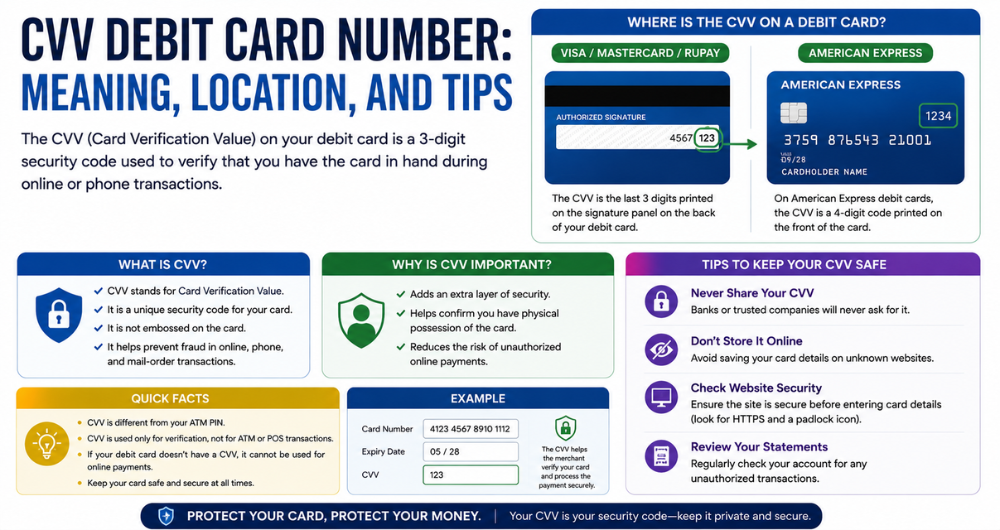
CVV stands for Card Verification Value. It is a short numeric code tied to your debit card that confirms you have the physical card in hand during a transaction. Unlike your card number, which is often stored by merchants, the CVV is meant to be entered manually each time you make an online or phone purchase, which reduces the risk of stolen card numbers being reused fraudulently.
Most debit cards issued by U.S. banks use a three-digit CVV. This applies to Visa, Mastercard, and Discover cards. American Express is the exception, using a four-digit code instead. The CVV was introduced by card networks specifically to fight card-not-present fraud, which happens when someone uses your card details without the card itself being swiped or inserted.
Here is a quick breakdown of what the CVV actually confirms:
- That the person entering payment details has physical access to the card
- That the card number was not simply guessed or generated by fraud software
- That the transaction meets a basic layer of card-present verification, even without a physical swipe
Where to Find the CVV on a Debit Card
Finding your CVV debit card code takes seconds once you know where to look. On most Visa, Mastercard, and Discover debit cards, the code sits on the back, printed in the signature strip or just to the right of it. It is usually the last three digits of a longer printed number, so read carefully to avoid entering extra digits by mistake.
American Express debit and charge cards place their four-digit code differently. Instead of the back, it appears on the front of the card, typically above and to the right of the main card number. This distinction trips up a lot of people who assume every card follows the same layout, so it helps to check both sides if you are unsure.
CVV Location by Card Network
| Card Network | CVV Length | Location on Card |
|---|---|---|
| Visa | 3 digits | Back, signature strip area |
| Mastercard | 3 digits | Back, signature strip area |
| Discover | 3 digits | Back, signature strip area |
| American Express | 4 digits | Front, above the card number |
If your card is digital only, such as a virtual debit card issued through a banking app, the CVV usually appears inside the app under card details. Some banks also let you view a temporary, rotating CVV for extra security, which changes periodically to limit exposure if the number is ever compromised.
Why the CVV Debit Card Code Matters for Security
The CVV exists because card numbers alone are not secure. A card number can be copied from a receipt, guessed through automated tools, or stolen in a data breach. The CVV adds a second data point that is far less likely to be stored alongside your card number, especially since reputable merchants are barred from saving it after a transaction under payment industry rules.
This matters most for online transactions, where the physical card cannot be swiped or inserted into a chip reader. Without the CVV, anyone with just your card number could attempt fraudulent purchases. Requiring the code forces the buyer to have handled the actual card at some point, which meaningfully raises the bar against casual fraud attempts and stolen number lists.
That said, the CVV is not a perfect shield. It cannot stop every type of fraud, particularly if a card is physically lost or stolen. Understanding its purpose helps you use it correctly rather than treating it as an unbreakable lock:
- It verifies card possession, not cardholder identity
- It does not protect against phishing scams that trick you into revealing it
- It works best alongside other safeguards like transaction alerts and two-factor authentication
CVV vs Other Card Security Codes
People often confuse CVV with other terms like CVV2, CVC, or PIN. These terms overlap in purpose but are not identical, and knowing the difference helps you respond correctly when a website or bank asks for a specific one. Some are printed on the card, while others are chosen privately by the cardholder for different purposes entirely.
The table below compares the most common codes tied to debit and credit cards, so you can quickly identify which one applies to your situation.
| Term | Full Name | Used For | Set By |
|---|---|---|---|
| CVV | Card Verification Value | Online and phone purchases | Card issuer, printed on card |
| CVV2 | Card Verification Value 2 | Same as CVV, used by Visa specifically | Card issuer, printed on card |
| CVC | Card Verification Code | Same purpose, used by Mastercard | Card issuer, printed on card |
| PIN | Personal Identification Number | In-person ATM and chip transactions | Chosen by cardholder |
In practice, CVV, CVV2, and CVC all serve the same function under different network branding. Your PIN is completely separate and should never be entered on a website, since legitimate online checkouts never ask for it. If a site requests your PIN for an online purchase, treat that as a clear warning sign of fraud.
How to Use Your CVV Debit Card Code Safely Online
Using your CVV correctly is straightforward, but a few habits make the process safer. Always confirm you are on a legitimate, secure website before entering any card details. Look for “https” in the address bar and a recognizable, correctly spelled domain name, since fraudulent sites often mimic real retailers with small spelling variations.
Follow these steps for a safer checkout experience:
- Verify the website’s URL and security certificate before entering payment details
- Enter your card number, expiration date, and CVV only on the actual payment page
- Avoid saving your CVV in browser autofill settings or unsecured notes apps
- Double-check the total charge before confirming the transaction
- Close the browser tab after checkout, especially on shared or public devices
A quick safety checklist can help reinforce good habits every time you shop online:
- Confirm the site uses HTTPS encryption
- Never share your CVV through email or text messages
- Avoid entering card details over public Wi-Fi without a VPN
- Use virtual card numbers when your bank offers them
- Monitor your account activity right after any online purchase
Common CVV Debit Card Scams and How to Avoid Them
Fraudsters know the CVV is valuable, so they use several tactics to trick people into revealing it. Phishing emails and texts are among the most common methods, often disguised as urgent messages from your bank asking you to “verify” your card details through a fake link. These messages create pressure to act quickly without thinking.
Phone scams work similarly, with callers posing as bank representatives who claim your account has suspicious activity. They ask for your CVV to “confirm your identity,” which is something a real bank representative will never legitimately need to do over an unsolicited call. Recognizing these patterns is the first step toward avoiding them.
Watch for these common warning signs of a CVV-related scam:
- Unsolicited messages asking you to confirm card details urgently
- Links that lead to unfamiliar or slightly misspelled website addresses
- Callers claiming to be your bank who already seem to know partial account information
- Requests to read your CVV aloud over the phone or type it into a text reply
- Pressure tactics that discourage you from hanging up and calling your bank directly
If you ever suspect a scam attempt, contact your bank directly using the number printed on the back of your card, not a number provided in the suspicious message itself.
Debit Card Security Best Practices Checklist
Protecting your CVV debit card code is part of a broader habit of good card security. Small, consistent actions reduce your risk significantly over time. Treat your CVV with the same caution you would use for a password, since in many ways it functions similarly during online transactions.
Here is a practical checklist to keep your debit card information secure:
- Never write your CVV on a sticky note or store it in an unsecured file
- Enable transaction alerts through your banking app
- Use virtual card numbers for online shopping when available
- Regularly review your bank statements for unfamiliar charges
- Avoid sharing card details over social media or messaging apps
- Update your banking app and phone software regularly for security patches
- Report a lost or stolen card immediately to freeze further transactions
Building these habits into your routine takes little effort but pays off significantly if your card information is ever targeted. A few seconds of caution before entering your CVV can prevent hours of dealing with fraudulent charges and account recovery later.
Conclusion
The CVV debit card code is a small detail with a big job. It confirms that you physically hold your card during online and phone transactions, adding a meaningful layer of protection against fraud. Knowing where to find it, how it differs from codes like CVV2, CVC, and your PIN, and how scammers try to steal it puts you in a much stronger position as a cardholder.
Good habits matter more than complicated tools. Checking website security, avoiding phishing attempts, and monitoring your statements regularly will keep your CVV debit card code working the way it was designed to: as a quiet, effective safeguard behind every purchase you make.
Frequently Asked Questions
Is it safe to give my CVV debit card number to a website?
It is safe on legitimate, secure checkout pages that use HTTPS encryption, since that is the standard way online retailers verify card-present-like transactions. Avoid providing it through email, text messages, or unsecured forms.
Can someone steal money using only my CVV?
Not usually on its own. A CVV is typically needed alongside your full card number and expiration date, but if a fraudster already has those details, the CVV can complete a fraudulent transaction, which is why protecting it matters.
Does my CVV change when I get a new debit card?
Yes. Every time your bank issues a new or replacement card, a new CVV is generated. The old code becomes invalid once the new card is activated.
Why doesn’t American Express use a 3-digit CVV?
American Express uses a four-digit code located on the front of the card instead of the back. It serves the same verification purpose but follows a different format specific to that network.
What should I do if I accidentally shared my CVV with a scammer?
Contact your bank immediately using the number on the back of your card, request a card freeze or replacement, and monitor your account closely for unauthorized charges over the following days.